
I finally did it. I put a toe in the water of painting my cabinets but now feel completely drenched. And now I have tannin bleed on top of it all? Are you kidding me?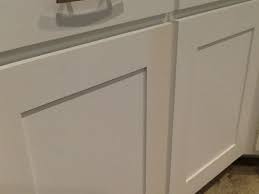
This is not a project to take lightly. All those fabulous white-painted, farmhouse kitchen posts on multiple blogs out there make it look so easy, but I’ve realized the bloggers are leaving a few details out. I have known for a long time that this is an anxiety-provoking do-it-yourself task. That’s why I painted just the backside of the cabinets, those facing the family room, two years ago with linen paint and never returned after that. It is one of the most difficult, time-consuming, and completely-obvious-that-you’ve-done-a-crappy-job tasks concerning household painting ever.
I got the desire to tackle this project years ago, pre-everybody’s doing it, pre-Fixer Upper, where something like 90 percent of Joanna Gaines’s finished products contain white-painted cabinets, including those in her own home. I’ve hated my oak, blah cabinets since we moved in twenty years ago. Over the years (usually, just before company showed up), I’d take out a can of stain and go over the blotchy areas of the wood. Before too long, I had multiple stains on the cabinets in a myriad of tones, and even though it helped a little, with wear and tear the finishes got dirty and grimy, which isn’t hard to do in as tiny a kitchen as mine. And because I never properly removed the old stain before applying a new one, it had all built up, grime and all.
I have been a fan of the homey, country (now called “farmhouse”), shabby chic look for some time. I like that it’s relaxed and easy-going. It’s not fussy nor froufrou nor prone to need an update when the latest trend comes through the door. It’s basically me. So, of course, when I came to the conclusion that my life would be so much happier with antique white cabinets, I had to try it.
My cabinets are made of oak. They’re from the early 1970s. They are not in the best shape, but they’re for real, which is more than can be said of most, if not all, the cabinets inside your local IKEA or Home Depot. Yes, I could afford to go to one of those big box guys and order a lovely, matching set–and that’s still an option depending on how badly my cabinets turn out–but I wanted to give it the college try and paint my own. And isn’t now the time, what with all these awesome before-and-after shots on blog after blog?
I am a researcher. It’s part of what I do, so I researched the heck out of techniques (rollers or brushes, or both?), paints (milk paint, chalk paint, latex?), primers (oil or water based?), sanding options (yes or no?), top coats (flat or satin?), and colors (linen or antique white?). First, I tried linen. And it was just OK on these cabinets, so to live outside the box for once and not take the middle-of-the-road option (linen is a very beige-y, middling option, by the way), I finally decided on antique white.
Two weeks ago, I applied it over my old linen-painted backside of the cabinets. Then I continued with the end boxes. Today, I struck out on a single door and a single drawer. And that’s when I discovered something a lot of bloggers don’t mention/cover up: tannin bleed!
Tannins are extracts that can leach out of certain woods, including oak, cedar, and redwood, and can alter paint, yellowing it. Not a single blogger I followed who used the same paint as I am (General Finishes milk paint) mentioned this. I’m not just blaming the wood, though. I’m sure all those years of built-up stain hasn’t helped. So, I’ve taken to sanding each piece, and priming each one with two coats of Zinsser 1-2-3 for good measure. So far, so good.
I’m nervous enough about this project, so to have a poor result right away nearly devastated me. I’m glad I have found a solution. I hope it continues to work. I will update you with the results as I go along.

 rose in real life