my first grocery delivery (or, i could get used to this)

I just placed my first grocery delivery order, and I could get very, very used to this concept.

cart


I’ve been laid up for the past week. Six days ago I had hand surgery, and two days after that I came down with the absolute worst stomach bug of my entire life. I will spare readers the gory details, but let me say when I was done using the bathroom, a Civil War battlefield would have looked more pleasing.

The violent episodes lasted a good twelve hours straight, with no feeling of that semi-relief one usually gets in between. I contracted the illness from my son, who came down with it just an hour or so after my husband and I returned from my surgery with a fast-food dinner. I’d had my favorite sandwich of all, an original chicken; my currently pescatarian husband had fish; and we picked up a whopper of a burger for the twenty-year-old. About a half hour after eating, my son became sick. He was so bad, my husband took him to the ER, where he was given an anti-nausea drug, morphine for the pain he was experiencing in his back, and then an IV drip when he wasn’t getting any better.

Thinking it was food poisoning and that food poisoning wasn’t contagious, I didn’t worry too much as I helped him the next day, my dominant hand in a cast and all. Then without warning and with about a half dozen chicken wings in my belly, my body got to experience the nasty virus for itself. Needless to say, it ranks as one of the worst weeks of my life.

Being unable to fend for myself, which is just awful for a perfectionist who runs the household, I had to have my older son make quick runs to the pharmacy and the store for me. When I thought of more things we needed when he wasn’t here, I asked my husband to get a few items yesterday. My husband can do many things well. He’s a hard worker, he is a good friend, he keeps the yard up, and he is conscientious, but he doesn’t run many of the household errands. Therefore, the list I gave him got a bit tweaked, shall we say? Coconut milk came home as coconut water (yuck), medical tape came home as the impossible-to-tear type (I have one hand here. Come on), and a rotisserie chicken was substituted with overpriced, gluten-free-bread-crusted shrimp. What? But I’m used to disappointment.

So, this morning, knowing I had to place an order for a mega bag of dog food from Target, I added on a few grocery items: actual coconut milk (for the curry I envision making sometime this week, when I magically get better and feel like eating), a loaf of sourdough bread that isn’t falling apart (as my husband informed me yesterday of the one loaf I’d purchased ten days ago), fresh vegetables, a pack of extra large bandages to cover my wound, Gatorade, and a few other items.

My order was placed around 8:30 a.m. for a 10 a.m. to 11 a.m. drop-off. I received a cheery text when the food was purchased and loaded into the shopper’s vehicle and she was on her way. Within ten minutes, the bags were unloaded and placed on my doorstep. I grabbed the few items and put them away. It was by far the easiest grocery shopping experience of my lifetime. I love you, Internet! I love you, Target! I love you, first person to think this was a great idea!

Will I grocery shop online again? By golly, yes! I may even try my local grocery stores or Amazon, though I was pleased with the promptness and service of Target, and the fact that I could also add on a few non-grocery items that the shopper could grab as well. The delivery fee, because I didn’t spend a certain amount, was a bit steep (about $10). I thought it was worth it, though, given the time I would have wasted going to the store and the gas money to get there and back. Plus, I’m still very under the weather.

Science and technology can’t do everything. They certainly can’t free us from pain, illness, and suffering, but they can deliver our groceries when we’re in need. My hat’s off to that.

are today’s parents selfless or selfish? (or, why are so many parents taking kids to adult venues these days?)

Who could avoid the story all over the news a few months back of prominent parents buying their kids’ entrances into elite universities, some going as far as bribing school officials, having others take their kids’ standardized exams, and lying on applications by superimposing images of their children’s faces on student athletes’ bodies? Society felt they were part of a trend of helicopter parents risking their own careers and lifestyles to get the very best of everything for their children. Some called them selfless.

But another trend in parenting is also prominent these days: taking kids along to rock concerts, brewpubs, tony restaurants, and R-rated movies, to name a few,  for no other reason than because Mom and Dad want to go. Several theater chains, including AMC, have implemented a “no 6 after 6” policy, meaning no children under age six will be admitted to R-rated movies after 6 p.m. even when accompanied by an adult. Regal enforces the same rule but without a time limit. Is it because six- and seven-year-olds are so  much more mature than kids five and younger? Oh, no. It’s not that. The rule was instituted to make the movie-going experience better for the adults in the theater, presumably to keep them buying tickets.kid in theater

So, don’t worry, Mom. As long as they’re at least in the first grade, Kaedan and Jaelyn can sit right there next to you when Bruce Willis’s guns are blazing, scar-faced Chucky is tormenting children, and that hunky actor drops his drawers.

And if you want to take your three-month-old to a concert or next Sunday’s 49ers game, you’re in luck! Baby Banz makes noise-cancelling headphones for every tot.

My husband and I were at a brewery last night, meeting up with friends who knew one of the band members performing in the live show. The music was pretty tame, mostly ’80s tunes, and the concert was outdoors, so the noise wasn’t deafening. Still, it was nighttime and beer was flowing. My friend, looking at the three-, four-, and five-year-olds playing on the ground nearby, turned to me and said, “Did you ever bring your kids with you to a place like this?”

I told her, “Nope, just like you, I never left the house from the time I had baby number one until the last one was about in middle school. Plus, the kids wouldn’t be welcome. It’s a different world these days.”

And indeed it is. The only socializing we did with other adults occurred while cheering on our kids from the sidelines of soccer games and swim meets. We would hash out our lives since the week before while ripping into Frito-Lay snacks and cut-up oranges and cracking open an ice-cold Aquafina.

If a team banquet happened to be at a restaurant, we might have a margarita or a Blue Moon with our meal, but that wasn’t until our kids were well into high school and the younger littles were left at home (supervised, of course).

So what’s changed? Families are smaller, for one. Taking a kid or two to Ruth’s Chris in the Prius is about as expensive as it was herding the family of six into the minivan and off to the Ponderosa. And with the constant exposure to the world’s events and pop culture through social media these days, our kids are growing up sooner. Nowadays, the f-word can be heard and adult behavior can be witnessed on the TV screen any time of day. Add to that the fact that current culture has become less childcentric, it is no surprise to see kids digging into a lobster tail and a juicy steak, swaying to tunes at an Elton John concert, or staring at Keanu at John Wick: Chapter 3

As long as the kids are well-loved, supervised, and taken home at a reasonable hour, their being at the brewpub or the restaurant shouldn’t matter to other people. Toting a toddler to Lambeau Field, even with headphones, isn’t the worst thing a parent could do (unless it’s minus-twenty degrees).

Who knows? Maybe parents have it right these days in not sacrificing their lifestyles for their children. Still, the maxim of kids being seen and not heard has taken on a whole new meaning these days.


konmari in reverse (or, when is it collecting and not hoarding?)

I began to embrace the KonMari method of decluttering back in the winter, after reading one of Marie Kondo’s books and watching her brief but uber-popular Netflix series Tidying Up.

konmari

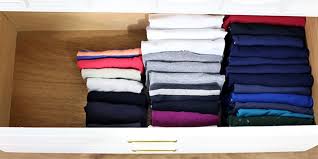
I learned to fold like a pro, transforming my sloppy T-shirts, pants, and underwear drawers into happy, organized things of beauty. Gone were piles of shirts of all sizes, shapes, and colors smothering one another. In their place are uniform rows of items folded the exact same way. Now when I open my T-shirt drawers (one for short-sleeved tops and the other for long- and three-quarter-sleeved shirts) I can spy with my little eye everything I own.

I also attacked my closet and kept what sparked joy, of course, and discarded what didn’t. I KonMari-ed my bookshelves too and finally freed myself of all those small-type, yellowed paperbacks from college lit classes that I just “knew” I’d read again and again but never did. Goodbye, Sister Carrie. So long, Madame Bovary. And take David Copperfield with you too, please.

I attempted to free the house of DVDs as well, but this is one category I’m stuck on as I visualize my future grandkids popping in Toy Story, Finding Nemo, or any one of the Harry Potter series. I have no grandchildren yet, and all my own kids are no longer that. So the DVDs from their childhood sit idle on the shelves these days, except, of course, at the holidays, when  Charlie Brown and Linus as well as the Grinch come to life once again.

As for the adult DVDs, there are a handful I’ll watch again and again. Sleepless in Seattle, Dan in Real Life, and Steel Magnolias come to mind. But since I love these films as much as I do, of course I’ve purchased digital copies from Amazon, making them accessible anytime on every electronic device imaginable.

So why then do I hang on to the DVDs? I could argue that the boxes’ art and descriptions are as cherished as the films themselves, kind of like album covers of old. Or I could say that they don’t take up much space at all since they’re so thin. Okay, these are reasonable arguments for hanging on to the greats, but what about all the rest?

And more importantly, why am I adding to the collection?dvds

That’s right. Since quitting my library job in December, where thousands of DVDs were at my fingertips, I have been going to thrift stores and book sales at neighborhood libraries and purchasing not only books I’ll likely never read, but DVDs too, many of which I have already seen or, like the books, will never take advantage of. But there are some movies that I was very fond of in the past and hadn’t seen in so long that I just had to have a copy. I’ve watched a few. Roxanne, for one, was as good as I remember it; Say Anything, not so much.

My daughter who tends to be more like her dad in the clutter department suggested I purchase the movies, watch them, and re-donate. What a great, practical idea! If only I could. I’m afraid once the Terminator has entered the building, there’s not much I can do to make him leave. I’ve thought of reselling my DVDs on Craigslist or eBay or etsy, and I may do this with the duplicates because–woe is me–there have been times I’ve purchased a second copy of a movie I had just bought a few weeks back, not recalling whether I had it!

Anyway, they are slim, they’re good for a couple hours of entertainment, and they’re cheap. Some things, Marie Kondo will agree, are worth keeping because they spark joy again and again.

Poll: If you were stuck on a desert island, assuming there was electricity and plenty of shade and popcorn, which movies would you bring with you (chances are I have them on my shelves)?


putting a pet down (or, how life will never be the same)

Jack loved Christmas.20190228_212111

Every year just after Thanksgiving, I make multiple trips out to the garage to bring in items to decorate the house. I start with a four-foot artificial tree for the family room, set up my village of homes, shops, and a church, and then get to wrapping the stair rails in garland. That’s the part of Christmas Jack loved most, the garland.

I don’t know why, none of us could figure it out, but he loved to lick and try to eat the artificial garland that wrapped around the lowest posts of the stair rail. He was a character like that, and that’s what we loved about him.

Yesterday, I had to make the awful, but necessary, decision to put Jack down. He was diagnosed with oral cancer (most likely squamous cell carcinoma) in May after I brought him in because of a swollen face, a terrible odor, and excessive drooling. His doctor wasn’t in, but he saw another and she had to deliver the news. She gave him a steroid shot and sent us home with a pill to be diluted with water and used as a wash for the open sore, a liquid medicine for the infection, and another bottle of buprenorphine for pain.

At first, he did well on the meds. The antibiotic took away the infection, the wash worked for a while, and we continued refilling the pain medicine to keep him comfortable. There were times when he looked almost normal–which if you’ve ever gone through the end of life with pets (and even humans) you’ll have noticed a second wind of sorts, when you falsely are led to believe all is well again. The facial swelling reduced and he moved from sitting atop a wing-back chair near the open window to sitting next to me on the couch every evening as I read or watched TV. He’d eat his dry food and his wet, and I’d treat him with his favorites, Temptations.

But then things took a turn for the worse–the inevitable, I’m afraid. He stopped eating his crunchy dry food, which he loved and which the doctors were surprised he even continued to eat because of his condition, and would hop off the couch and meow for his wet food a couple times a day. While eating, he’d turn his head from side to side to try to find a comfortable place in his mouth to masticate the already mashed food. It got to the point the last couple days that he couldn’t even manage his wet food, though. Sometimes, after meowing for a meal, he would walk over to his food bowl and just look at it, even if I stuck in a few Temptations, and then walk away.

But he was hungry, so a couple times, including right before I made the call, he tried eating and whether the food became lodged in the wound or he stuck himself with a tooth, I’m not sure, but he’d literally scream in discomfort and run around at full speed as if to run from the pain or dislodge the food. Yesterday, as I witnessed this, which alarmed our golden retriever and Jack’s best friend, and saw his mouth full of blood, I knew just what to do.

Jack could no longer eat without being in excruciating pain. If he could no longer get nourishment, he would starve to death, and he was beginning to show signs of this. I called his doctor’s office, but with his doc being out of town, I ended up calling the emergency vet. I then let my youngest son know. He started on his way home, and I texted my husband, who also decided to leave work. I sent a text to both daughters and then my older son, who was probably closest to Jack, especially when he was younger, calling Jack his dog. My older daughter was nearby and came over too.

We took him in, and Jack went peacefully at age sixteen.

Life will never be the same around here, especially at Christmastime. When I hang the garland this year, I’ll also hang a picture of Jack on it. Jack loved Christmas, and we loved Jack.

the icebox challenge (or, trying to make use of what we already have)

Americans waste nearly a pound of food a day, and I’m here to prove it.

Nearly every week, I throw out bananas that have gone black, oranges that have gone green, and reusable containers filled with leftovers that, by the looks of them, I’d rather not use again.

Take a look at my fridge right now (trying not to judge my housekeeping skills):fridge

It’s brimming with food.

Sure, I could argue that I don’t have that much space and the bulky broccoli heads and sourdough loaves take up a lot of room, let alone the family pack of chicken thighs. But truth be told, I have too much food. And some of it will be tossed.

As a way to remedy this, I plan to use up what I have before I buy more. That’s right. I’m going to see how far the asparagus (at least the fresh bunch I picked up Saturday and not the one tucked in the back of the veggie drawer), milk, butter, and fruit can go before I spend more to replace them. You see, because of recent circumstances, I may need to stretch the budget.

Today my husband told his employer that he wants to cut his hours and, along with cutting his hours, his pay. He’s stressed out and wants to pursue another occupation. I thought I was OK with this until he did it and it became a reality. This was the one year in his entire thirty-year career that he’s made what he’s worth. And now he’s not.

To make matters worse, my work and pay have been dramatically cut this year, none of it my doing. My freelance work is in the tank. I’ve had nothing for two months’ straight from one client and nothing but a four-hundred-dollar project from the other. I apply all the time to various companies, but it’s a cut-throat world out there, and one job ad posted on the Internet can warrant hundreds if not thousands of applicants, especially in a national search. I work a part-time job, but all I can get are 10.5 hours a week. Try living on that. I could barely make a car payment on that kind of money.

I look for jobs–and apply–all the time in town, too, not just remotely. But it’s so hard to get a fish on the hook. I’ll be lucky to find something in six months (that’s how long it took to get the 10-hour-a-week job I currently have). On top of it, one of my four adult kids is recently unemployed and another is woefully underemployed. It’s ruthless out there.

So there is now a financial incentive to cut back on food shopping. I plan to do my part to keep expenses down. I’ll use up what we have, getting creative when I need to. I also plan to cut cable and take on one of the streaming services instead. I may cancel the newspaper as well, although it gives me great joy. Still, if I cut it, I’d probably be lured back with some good incentives. We have old cars (nothing even in the 2010s vintage), so selling a car isn’t going to help. In fact, we could use a newer car. They all have well over 100,000 miles–one has over 220,000! (Yes, it’s a Toyota.)

I have a gym membership, but it’s free because my son is an employee, so eliminating that won’t help. We eat out a few times a month and it’s usually just to get fish tacos or Thai food (the greatest bargain ever), but that will have to go. Add big birthday dinners to the list. No  more treating the entire family of seven adults to a meal, which can run up to a couple hundred dollars. It’ll be a bargain movie and a slice of pizza from now on. I’m looking into doing more crafting with my time and maybe opening an etsy shop if I can make enough product to sell, but supplies cost money and storage isn’t plentiful in our house, where my two adult sons also live.

The thing is, I have a history of scrimping and saving. This past year I finally was able to loosen my belt and flop back on the couch a bit more, arms and legs spread eagle and a look of contentment on my face. Now it’s pants fully tightened and nose to the grindstone as I try once again to make ends meet. The fridge is my first attempt.

freelancing lies (is it really possible to make it work all the time?)

My freelance work has nearly dried up. I’ve been freelancing for more than thirty years, but it was nearly ten years ago that I knew this type of work could help support the family. At that time, I began working with a large financial information network and got some pretty steady transcript work. famine

The job sufficed for nine years, with there being peaks of extreme volumes of work interspersed with months of slower volumes that dissolved to just a trickle for a few weeks, but there was always something to do–not every day, but I still earned something, even if it was just forty dollars a week. This steadier income was a great addition to my other freelance assignments too, which were fewer and farther between.

Upgrade after upgrade that this big company made to its software resulted in the latest iteration, which allows the company to block certain freelancers, giving the great majority of the work to a handpicked few, many of whom are in third world nations, where the operations reside. As of mid- to late May–so over a month–I have had zero work from a company that has files available. (I’ve figured out a workaround to see what is up for proofing but still can’t access it.)

So here I am, experiencing yet another hurdle of freelancing: when the client decides to shut you out instead of you being able to cherry-pick your clients.

I’ve said it before and I’ll say it again: Freelancing is a fickle environment. You can have the greatest relationship with a client, but for whatever reason–they want to save money, they have new freelancers they want to acclimate,  they decide to use former employees or interns–you can lose clients and money very, very fast.

There’s a reason auto financiers and mortgage companies request proof of three years of a freelancer’s income instead of just checking last year’s tax statements, as they do with people drawing regular paychecks. The reason is there’s no such thing as a regular paycheck for a consultant. I actually had pretty steady income for a few years in a row, but then one of the publishers I was with for decades went bankrupt, fewer books were put in print, fewer people were needed to edit those books. Bam! The door got shut on a very long relationship.

Another client I picked up a few years ago by seeing an ad on its website and requesting and passing a test hasn’t sent me one single book this year so far–and we’re halfway through the year! If I get something late this summer for the fall books I will jump for joy. But I’m not counting on it.

Today, I came across a 2014 article on FlexJobs, a company that promotes freelance work (and whose jobs have never, ever panned out for me in over a decade of searching the site as a member and not). The article titled “6 Lies About Freelancing, And the Truth,” by Jessica Howington, sets out the “misconceptions” of freelancing and purports to give the “facts,” to which I say “Phewy!”

Those of us who’ve lived the life know the facts, which are exactly as laid out as falsehoods in the article:

  1. “It’s always feast or famine.” Unless you’re contracting for a company and taking on the work of someone the company would typically employ (with none of the perks of being an employee, like benefits and a sliding pay scale, of course), the work is going to be sporadic. My industry, publishing, has two seasons, spring and fall, and that’s when 90 percent of the work comes in. So, yes, I either am sweating to get through multiple assignments or I’m twiddling my thumbs and writing blog posts.feast
  2. “You’ll always have to juggle multiple clients.” Again, if you’re a lucky soul doing the work of a regular employee (and, again, without any of the benefits), you won’t be juggling multiple clients. For the 92.7 percent of the rest of us, we will.
  3. “People freelance only out of necessity.” I honestly don’t know anyone who would choose to pay for their own non-company-sponsored health care plan, have zero paid vacation and sick days a year, have no retirement plan, work while their kids are having a noisy play date in the room off your office/dining room/bedroom, stop working to pick up the other kid from school, have no one to chat up around the water cooler, and. . . . You get the picture. But the FlexJobs article swears that people freelance “mostly for better flexibility and more freedom.” I don’t know about you, but I am not loving the freedom and flexibility of not having enough money to take a vacation.
  4. “You need to have your own business.” The article claims that basic business skills like dealing with taxes, legalities, and contracts are only for those running “actual business, ” not “independent contractors, moonlighters, and temporary workers.” Hah! I’m an independent contractor and I for damn sure have to do my own taxes, sign my own contracts, and keep track of my own expenses, as does anyone who makes money as a non-employee. What crap.
  5. “Finding clients is always a battle.” Hell yeah! It is a constant battle. Clients aren’t seeking you out unless you go on those sites that make freelancers humiliate themselves by bidding against each other so the client can take the lowest bidder. Another crock of crap.
  6. “Clients treat you badly.” According to the article (and thank you so much for reminding us of this), “Clients are going to treat you fairly and will do so based on your abilities. . . . If you treat your clients well and are willing to work at the relationship, you’ll find yourself with several repeat clients.” News flash, Ms. Howington, I have done nothing but be professional as a freelancer and do great work, but, guess what, I’m still without work. Freelancers can lose work on a whim, so please stop filling people’s heads that this is a chosen work relationship. Most people do it out of necessity, as in they are raising kids and have to be present or they lost their job and need some income.

Again, the lies we are told as freelancers are the truths we experience.

i found a job (but i’m missing the old one)

I started a new part-time job on Monday. Compared to the last library I worked at, this one will be much, much slower paced. The location is terrific–just thirteen minutes from home on surface streets (or I could take a freeway south one exit)–the pay is decent (as in 1.5 times better per hour than the last place), there are fewer hours to commit to each week and one fewer day to show up, I have all Sundays and most Saturdays off, and the director is quite nice.

So why am I missing and yearning to be at the old place?

It’s the people. I had friends there, people whom I was really close to and people who were casual friends to chat up on occasion. Some people I avoided, but most people I enjoyed being around. I like being busy too, as in busy the entire time I am at work. Sitting behind a desk most of the time in the new job will be quite a change.

I just learned that a position has opened up in the old place. And I’m contemplating applying. I know which hours will be available, and some wouldn’t work with my current schedule, but I’m wondering if some of my buddies would switch shifts to accommodate my return. Then I wonder if I’m being crazy. Is going back there really such a good idea? Will they even have me? I was a really good worker, but I am a bit opinionated and am one to speak up for myself. Would I be willing to work weekends and nights again? Is being around my work friends really that desirable? Some of the physical work was a bit much for me with my autoimmune disease. Am I ready to go back to the aches and pains?boom

My freelance work has diminished a lot lately. If I had been this slow last year, I never would have quit. Taking the new job will help to keep me occupied and provide income,  but it won’t bring me back to what I was earning. Should I make the move to return to the old place?

Stay tuned.


have one carry-on, will travel (or, how to pack light)

For someone who finds it difficult to part with things (and I’ve the overstuffed closets and refrigerator to prove it), I have learned to pare down when traveling. I laugh when I see people taking weekend trips with rolling suitcases that could fit an average-size eight-year-old inside. With a little planning, anyone can leave the steamer trunk at home and make do with a carry-on.luggage

Having four kids and always having to take road trips because of the cost of flying, on trips I just couldn’t bring an extra suitcase for just my shoes or fourteen changes of clothes for three days on the road. It would be impossible to pack the entire family and all that luggage into a minivan. So I’ve learned to pare down.

Suggestions for traveling light:

  • When flying, bring only enough for just one carry-on and one personal item. Checking luggage may seem convenient–you don’t have to lift the forty-pound bag into the overhead compartment, for one–but locating the baggage area in the airport and then waiting for the bags to unload onto the carousel after a flight is time consuming when you’re likely exhausted. Skip the luggage merry-go-round and carry your own bag. (A bonus: You’ll never have to file a claim for lost luggage.)
  • Pack clothes and shoes that are comfortable and versatile. Pick colors and patterns that match and you’ll get more use out of them and spend less time staring into an open suitcase. A single lightweight, waterproof jacket with a hood will be great for most any weather in the summer. Flats, not heels, can be worn both day and night, and T-shirts and blouses can go with shorts and jeans or a nice skirt. One pair of athletic shoes for heavy walks or hikes should be enough along with those flats and maybe a pair of light sandals in the summer. Stick to neutral bottoms, but pack enough underwear to last the entire trip unless you have access to a laundry.
  • Download books or videos onto a tablet or phone and eliminate lugging stacks of books. Books and magazines are staples for me when traveling. There have been times that our one-week summer vacation was the only time in the year when I could get a good book read. I would bring four or five magazines and at least two books. I still like the feel of an actual book and will pack at least one, but I also download books onto my Nook or Kindle and read them that way. Most libraries circulate ebooks (and electronic audiobooks) in addition to hardcovers and paperbacks, so you don’t even have to purchase from Barnes & Noble or Amazon if money’s an issue or if you’re not sure you’ll like the book after purchasing.luggage 2
  •  Take pictures with your cell phone. I bought a digital SLR camera a few years back after having wanted one my entire life, so I will pack that camera on special trips. Weekends away or places I’ve been before, however, I make due with the camera on my cell phone, which makes sharing and downloading the pictures easier during and after the trip, too.
  • Look up maps ahead of time and have them sent to your phone. Even before I have every stop planned out, I know generally the places and towns I want to see. Before a trip, I’ll go on Google Maps and plug in cities. There I can see the distance, the roads to travel, and the time it takes to make the journey. The itinerary can be sent to my phone or email address for when I’m on the road.
  • Bring flat shampoos, conditioners, and lotions or silicone containers. Instead of using bottles, I save up the flat individual cellophane packs of shampoo and conditioner samples that sometimes come attached to full-size bottles. I also pack baby wipes or Wet Ones instead of liquid hand sanitizer. There are new silicone pouches, which are flexible and guaranteed not to leak, that a lot of people swear by. These items take up much less space than those in individual, rigid bottles and are lightweight too.
  • Keep like items together.  Don’t be that guy, the one who unzips his luggage and everything goes flying every which way. Keep all your underwear, T-shirts, and pants together in individual compartments (like mesh bags for socks) and they’ll stay neater and save time when unpacking. I’ve read rave reviews for the new packing cubes that look like small versions of luggage. They are used to keep similar items in one section of the suitcase. Plastic bags with zip closures can also work and cost less. They’re great for keeping small kids’ complete outfits together, too.
  • Leave a little space for souvenirs, including new clothing. It’s nice to pack light and then purchase items on your destination to serve as souvenirs and to wear on the trip. You’ll be happier having a little more room for these items than having to check an extra bag at the airport before heading home.
  • Rent sports equipment, like snorkels and fins and tennis rackets, or buy cheap versions you don’t mind checking (or chucking).

It’s tempting to bring extra clothes for every occasion conceivable on a trip, but most of us can get along with less. After all, our adventures–and not the straps from our overstuffed bags–should leave an imprint on us.

wander wisely all right (or, how travel reviews are so important in where to stay)

We’re taking a trip to the East Coast next month. I’ve already booked our flights and lodging, but now I’m going back and making doubly sure I want to stay in the places I’ve chosen. So I’m reading up on recent travel reviews.

gnome

One of the most magnificent things about the Internet is how easily information is disseminated. I love that people’s opinions are out there, ready for the rest of us to peruse and help make decisions. I double-booked one night of our trip and having tapped into May reviews on TripAdvisor, I know just which booking I want to cancel.

There are plenty of places to find reviews online, including booking sites like Expedia as well as hotel websites. Of the two biggest review sites, I prefer TripAdvisor over Yelp. I find the demographic to be closer to my own, whereas Yelp seems to sway toward younger folks, and the reviews on TripAdvisor typically are more substantive. I don’t care how late the hotel bar is open and that there is a hot waiter serving table 12 who’ll slip you an extra crudites if you flirt hard enough. I want to know if the rooms are clean, if the desk staff is helpful, if you get a good night’s sleep on a comfortable bed, if the immediate neighborhood is safe, if there are rooms with views and free WiFi, and if the parking is free and breakfast is served.

I’ve no time for reading about someone’s personal lamentation of how they arrived at the hotel at 1 a.m. after their flight got delayed twice (is that the hotel’s doing?) and they couldn’t get staff to carry their bags up to their room. In other words, I find little value in reviews that are so specific to one person’s narrative that they are not helpful to the majority of readers. If I were to arrive past midnight, I’d expect the hotel to be short staffed and I’d also expect to carry my own bags to my room.

However, if you are in a room in which blaring music from the restaurant next door keeps you up at night, please let the rest of us know so we can ask for a spot on the opposite side of the hotel–or pack earplugs.  Also let us know if the music is a nightly occurrence or due to a special occasion, like a wedding. Fill us in on whether you asked for a room change but were ignored (was the hotel fully booked, precluding a move?) and whether anything was done to rectify your disappointing experience.

Once, when staying at a high-rise in downtown Portland, Oregon, I came back to my room with my dinner to find a screaming baby in the room next door. The conjoining rooms were separated by a closed door, so quite a bit of noise traveled between the two. The crying continued throughout my meal, with the parents doing nothing, it appeared, to soothe the child. I had a feeling this would be a pattern and called down to the desk to request another room.

By the time I got off the elevator with my suitcase, I was presented with a key to an even nicer room. It happened to be movie night at Pioneer Courthouse Square, but I expected and even enjoyed the sounds coming from the venue below. Now, that’s a hotel review worth reading. I got an immediate positive response from the hotel desk and the noise I experienced in my second room was warranted–and completely muffled, I might add, by closing my window.

On this upcoming trip, after leaving Boston and tooling around Connecticut, I’m conflicted between staying in Newport, Rhode Island, overnight or driving up to Providence. I’ve booked hotels in both cities for the same day. The one in Newport is more expensive (by about $150 a night!), but it is in a lovely seaside resort. The Providence hotel, on the other hand, is in a historic building with many restaurants and sights within walking distance. Two different experiences that are equally nice.

After reading people’s opinions, I’ve settled on the Providence hotel, whose reviews average 4.5 out of 5, while there are plenty of examples of disappointed travelers who stayed at the inn in Newport. I’m getting a smoke-and-mirrors vibe from that place. It looks much nicer than it sounds, and the pluses seem to be for things we won’t be taking advantage of on our one night there, like the spa and the rooftop restaurant.

So thanks once again, TripAdvisor, for providing me with some feedback and sending my confused mind in the right direction.

why so much? figuring out why certain everyday items cost a small fortune

I was in a charity thrift store today picking up a small table lamp, when I had, shall we say, a light bulb moment: Being that there were none at the thrift store, I realized I would have to buy a shade for the lamp elsewhere that would probably cost me three times as much as the lamp itself.

Why is that? Why are lampshades so expensive? They are made of paper or cloth and are attached by aluminum spokes. What’s the big deal there?

The cheapest shade I can find at Target for my small iron lamp is $9.99–or $4 more than I paid for the lamp. And the least expensive at Pottery Barn runs $28–more than four times the cost of the lamp!

I am at times befuddled by the price of certain items. It defies logic, for instance, that a hand towel would cost just a little less than a bath towel that is many times larger. And sometimes (see my example from Kohl’s below) hand towels cost even more than bath towels:

bath towl

hand towel


Even with the buy-one-get-one-half-off deal, two 16- by 28-inch hand towels would be $12, while two 30- by 54-inch bath towels of the same brand would be $10. Say what?

Printer ink is another example. The cost of a Canon all-in-one printer on Amazon currently runs at $69.99.

canon printer

The ink to put in that very printer, however, costs $56.99 for a pack of color ink and one black cartridge.

color ink

If you want to add in another black–because don’t we always run out of black ink before color?—that’ll set you back another $22.

black ink

Any dummy could see it would be less expensive to throw out the printer when the ink runs dry and buy a new one. For the sake of the environment, I don’t advocate such a move, but manufacturers have consumers over a barrel by charging exorbitant prices for the materials that make the technology useful.

There are other items as well that are uber cheap to make and dispense but cost a small fortune for the sake of convenience. Movie theater popcorn and soda and wine at restaurants are some examples. Since most people don’t (shouldn’t?) bring in their own popcorn or Coke to see the latest blockbuster, it kind of makes sense that theaters would sell a bucket of popcorn costing $0.20 to make for $8.50. It’s simply good economic sense when considering the overhead.

But these other items, like printer ink, make very little sense at all. I mean, do people buy that many more bath towels than hand towels and, therefore, making the smaller items is not as cost effective for companies? I doubt it. Or do people really go without lampshades, making them a luxury item? I think not.

If anyone can tell me why some things cost so much–and if you can provide more examples–please comment below. In the meantime, I’ll be busy cutting my 1,620-square-inch bath towels into 448-square-inch hand towels.