with one more birdy in the driver’s seat, this mom’s feeling empty-nest doom

birdyIt’s 2:00 p.m. Usually at this time on a weekday in the spring, no matter what I’d be in the middle of, I’d be lacing up my tennies, gathering up my purse, my phone, and a good book and rushing out to my car to drive to my kids’ school. There I’d park for the twenty minutes or half hour or so before one or more child climbed into the backseat or the passenger seat and we’d either head off to another school or straight home.

I did that for 25 years in a row. Until today.

Today, my youngest took the keys to our 20-year-old secondhand car with him–along with the car, of course–and drove himself to school. This is the first time in a quarter century that I haven’t had to ferry one or more child to school or pick him up. That’s a long, long time, people. And with that one demotion, I feel my life as a full-on parent slipping away.

Some moms and dads would be delighting in the fact that they didn’t have to retrieve their kids from school ever again. They’d be thrilled to be able to stay at work or continue that book or not have a project interrupted. I, on the other hand, am feeling saddened. Twenty-five years feels like a long time, for certain, and I’ll admit that at times running out of the house at 2 on the dot was a pain in the backside, but a part of me enjoyed it. I liked seeing my kids for the first time in hours and going over their days.  Those close quarters inside the vehicle would be where I learned about so-and-so’s getting called into the principal’s office or a friend’s not making the soccer team because of grades. I got to hear about the accomplishments of a good mark on an exam or an impending award or the heartaches of someone’s name-calling or someone else’s mean-girl moment. Sure, there were times I wanted nothing more than to continue what I had been doing uninterrupted at 2 p.m., but for the most part, I enjoyed the routine. I enjoyed, I suppose, being needed.

This having all four kids as drivers is a plus, for sure, but allow me to wallow for a while more, won’t you, in the fact that this job I’ve been doing for just under half my lifetime is coming to an end. Yes, I know one day all little chicks must fly from the nest, but this mama bird will not be giving them a big push.


having a friendship with a self-involved person takes patience

collage photo of woman
Photo by Andrea Piacquadio on Pexels.com

I have a single friend, no kids, whom I’ve known for more than 30 years. She’s funny, kind, and we think a lot alike. When we get together, we have plenty of laughs. She has known me and my husband since before we were married and before we had our four kids. She takes a general interest in everyone’s welfare. So why then when we talk or text or see one another does the conversation go 80 percent in her favor and 20 percent in mine?

I’ve been wondering if my friend glosses over the news I have to share in favor of talking about her life because she’s single and she’s all she’s got. I started googling “self-centeredness in singlehood” and there’s some scientific info to back it up but even more articles debunking it, mostly in editorials, often written by singles themselves. These editorials state how people can be self-absorbed and narcissistic whether they are single or not. How true, and far be it from me to put all singles into a box and label it “self-involved,” but why does it seem that my single friends and relatives care more about themselves and what they have going on in their lives than what the rest of us are going through?

As I stated, my friend has a genuine concern for me, my husband, and our four children, but she rarely deeply questions how they’re doing or offers to lend support if I need it–and I’ve needed it quite a bit over the past few years. And when I bring up something going on with one or more of us (and there is a lot going on in a family of six), she gives short shrift to what I have to say. She just about never takes me up when I invite her to family functions or other events involving my family. Or she sounds enthusiastic in the moment, when I first bring it up, but when the day of the event arrives, she finds an excuse to not come by. I understand feeling out of place when being around a throng of people who share the same last name, but to events when there are other friends invited, single and married, she won’t show up to those either.

She is close to getting a new job and asked if we could get together spur of the moment today so she could have the big reveal on the name of the prospective company (she won’t tell me in a text) and fill me in on all the details. I was tempted to meet up with her for a walk, which I need to do daily anyway, and not hang out at a coffee shop she suggested, where she can sit across from me and talk a mile a minute while I nod in agreement and try to interject conversation just to get cut off. But then I thought, why bother? I know it will be a one-sided conversation and I would have to put my own work aside at a time when I have to make some money to put food on the table, you know, the one with the six chairs around it?

She texted me about the new job earlier this week. During the texting conversation, I mentioned my youngest having to take the driving test tomorrow and my having just booked reservations for a summer vacation (we take trips just one week a year) and where we were going and why I had to work to make a little extra dough to help pay for everything, and then I asked for a few more details on the job sitch. And you can guess what issues in that text she only replied to. Yes, just the parts relating to herself.

My son graduated from college a couple weeks ago. Even though it’s kid/graduate number three for us, it’s still a pretty big deal. So the day before, when my son decided where he wanted to celebrate post commencement, I invited my friend, who loves impromptu plans, by the way, because her schedule is much more open than mine. Attending the restaurant lunch would be just the six of us and two of my brothers, one sister-in-law, and my sister, all of whom she knows. What did she reply? No, she said, she didn’t want to waste gas driving the 30 miles round-trip to the restaurant and back home–even though the meal would have been comped by us and I wouldn’t have expected a gift. (She hasn’t bought my kids anything since the oldest was born, and she’s now 30!)

I said I understood, that I’d be paranoid about spending even gas money too if I were between jobs. But that was before I heard of her plans for the long weekend: she’s driving four hours each way to hang out with friends at a nice hotel she’ll have to pay for, along with the food and drink, of course, she’ll consume while there.

There are more examples of her not making the effort on our part, and I give her a lot of leeway and probably shouldn’t have all these years. So part of this may be my own fault. But after having lost a dear friend to cancer a year and a half ago and finding out that another wonderful, helpful friend is moving away, I value the friendships I still have, good or bad. For some reason I just do. She and I both consider each other family members. But if that were the case on her part, why wouldn’t she come around to my family events? (She has no relatives in town.) Why would she constantly make excuses and then turn around and look like a hypocrite? I can extend my family to an infinite number of people. With her, I guess I’m it and I only am considered family on her own terms.

If I were single too, though, I suppose I’d call the shots as well, but I’d like to think, single or not, I’d still be less self-absorbed.

Leave a reply if you can relate.


weight loss is possible in menopause and i’m proving it

It creeped on over the years until I thought I was stuck. I couldn’t move down, just up. In weight, that is. Then I said to myself, “Self,” I said, “if not now, when?” Oh, wait, that’s what Oprah says in the ad for this weight-loss program.

But she’s right.

If not now, when? When you’ve put on more weight? When you’ve had to buy yet another, even larger pair of pants? When your lower back starts to ache from walking because of the strain your bulging midsection is putting on it? When your doctor prescribes a half-dozen different pills to thwart a heart attack? If not now, when?

I took the bait and off I ran. And you know what, it’s working!

I started reducing my food intake and exercising more on April 6. It’s now May 18 and I’ve dropped 3.5 pounds. I wasn’t huge to start with, but I definitely was starting to see a woman in the mirror I had never seen before and barely recognized. Every angle was now rounder. Every body part was now looser or wider or just plain bigger. My BMI was embarrassing. I shouldn’t have been in the high 140s at all. I should barely be in the high 130s even. But every year, eating basically the same diet as forever, the pounds kept adding up and were miserable to get off.

This losing pounds and getting more fit and healthy is still a work in progress, but I’ve read that it takes twenty-one days for an activity to become a habit. I’ve surpassed that time and I’m now in a routine of watching what I put in my mouth and upping the minutes on the treadmill or in walking the dog. I’ve increased my pace too. And on days when I don’t think I can fit another walk in, I’ll jump on the tradmill for ten fast minutes while the water for the pasta is boiling for the night’s supper. Or I’ll stick my feet under the wing chair in the living room and do twenty-five sit-ups.

I haven’t added up the calories I’m taking in, but I’d say it’s about 1,500 or 1,600. I stick to my basic toast and coffee  and sometimes an egg for breakfast. I eat a light frozen-food lunch and a cup of my favorite Greek yogurt and fruit. And dinner is my usual stirfry or pasta or whatever I make for the family. And there are always veggies. I’ve just cut back on quantity, especially of carbs, including my number-one favorite item: white Jasmine rice.

Thinking about what goes into your piehole prevents you from, say, shoveling in another slice of banana cream or piling in chips one after the other. It makes you reach for a mandarin orange instead of a cookie. And when you do treat yourself–and that’s perfectly fine–you’ll probably not want a double serving of ice cream or a generously sized piece of chocolate cake. You’ll savor that cookie or that cake and actually taste your food.

I plan to keep this up until I reach my goal and then stick with it as best I can. I don’t ever want to get to the high 140s again, because just around the corner are the 150s, and they’re waving me on.


if you film it, they will come

I went to the movies last Friday. This is not unusual. I try to get out to see something good every month or two or more, depending on the movies that are playing. There have been dry spells in which nothing to my liking was playing and there have been times when I have the pick of the litter.

This past week a new batch of films came out but the one I wanted to see had been in the more arty theaters and was now in widespread release. It was Hello, My Name Is Doris, with Sally Field and Tyne Daly. It was appealing to me because of the quirky lead character and a story line I could get behind. Doris is a sixtysomething, single, working woman with some issues. She lives alone now that her elderly mother has died and because she had never moved from the house she grew up in, she has a huge attachment to what it is, what it’s meant, and what belonged to her mother, which has resulted in a hoarding habit. Because she lacks social awareness (which reminded me of someone I’m very close to, by the way), Doris falls for and fantasizes about a life with a new young executive at her workplace when she mistakes his kindness for something more.

doris

The movie got great reviews and with Sally Field at the helm I expected there to be some people in the theater with me (yes, I have at times been the only one there!), but I was taken aback by just how many folks came out to see this film on a day with much more popular movies hitting the theaters for the first time, namely The Boss, with Melissa McCarthy (which I’d like to see; I’ve been a fan of hers since Gilmore Girls),  and others that have mass appeal, like Batman vs. Superman. I had to move over twice so my row could accommodate additional people. It was a smaller theater, but every row had at least ten people in it and some folks were forced to sit in the rows closest to the front.

So who was in the audience at this matinee? Mostly older people, either couples or senior women in groups. I thought it was telling that a movie with a longtime revered actor like Sally “You really do like me” Field, as well as a grown-up story line and some humor and warmth, can sell tickets. Hyped-up, big-budget fare like Batman vs. Superman, which got mediocre ratings, or the new Star Wars film, which is supposed to be good but which I’ve yet to see, are not the only films that will draw in viewers. And sure, the majority of filmgoers last Friday at the Doris screening did not fit into the typical 18-35 age group, the group that advertisers love because they’re the big consumers, but that’s my point exactly: If studios make mature, good films, they can bring out a wider audience and sell those precious tickets. And that’s refreshing news.

week one weight update

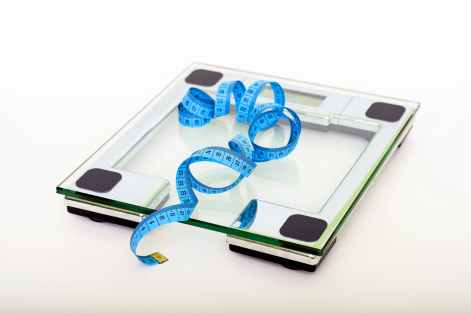
blue tape measuring on clear glass square weighing scale
Photo by Pixabay on Pexels.com

I’ve been on a weight-reduction and -maintenance program, the one in which you add points for food you eat and can subtract them with exercise, and I’m doing OK. I was hoping to have dropped two pounds by week one, but I’ve dropped just one. Still, I am putting on muscle weight–I can feel it–and I’m noticing my cheekbones are coming back into definition, my chin is getting smaller, and my girth is reducing.

I understand that weight loss is more apparent in the beginning, but because mine so far is slow and steady, and I have a history of putting muscle back on the more I exercise, I’m taking this as a silver lining and that my weight loss will be gradual but obvious.

I haven’t cheated at all, unless you count a Costco sample of Chicago-style popcorn cheating. I also went to the movies this past week, Friday, and I had a smallish bag of Target popcorn there, plus water. I figured it was about 6 cups of popcorn. But that’s all I had in the middle of the day between my usual morning meal of an egg and sourdough toast and a small evening meal. And I took my morning walk and then a longer, 45-minute walk at the nearby lake with my son in the afternoon. It was a great day. I love going to the movies and am glad the 6 cups of popcorn didn’t hurt me much. I also liked that I was able to make up for the calories by walking more than usual later in the day.

I don’t have a long way to go in my goal. Fifteen pounds isn’t 50 or 150 and I feel for people who have that much to lose. I can only imagine how discouraging it is to give up stuff you love, add in more exercise, which is often hard to accomplish when carrying extra weight, and not get the results. My weight gain has been gradual over the years–four babies in a thirteen-year span and then middle age and a desk job following directly afterward–so I assume my weight loss will be as well. It’s basically about being cognizant of what you put into your mouth and adding movement to help take away the calories added on.

It’s possible to shed the pounds one day at a time and I’m happy with my results so far.

will watching weight work ?

So I never thought in a million years I’d join a weight-loss and -maintenance program, but I have. Since one can do it from the privacy of his or her own home, I gave it a shot. I signed up for the three-month initial program and will track my progress on these pages.

I don’t know what to expect. Will it be difficult (I assume it will be) and will it impose on my lifestyle (I would guess it would)? I still cook for a family of four, so I can’t eat what I want when I want for dinner without having to prepare two separate meals, so the program I’m following allows participants to eat real food as we count points for food totals and exercise. It sounds like a reasonable plan, I don’t have to attend meetings (there’s online support), and I don’t have to buy prepackaged meals, which I’m sure would taste like cardboard and the portion sizes would suit no one bigger than Barbie.

My niece (and Oprah) signed on to this program recently and my niece has already shown improvement after just a couple months. Of course she’s in her early thirties and has yet to have a baby, so her body can’t be compared to mine apples to apples, but it’s nice to see her results. Like me, she loves to play board games and this is a game of sorts. Participants go onto their personal web dashboard and type in what they’ve eaten for the day and what type of exercise they’ve gotten. The dashboard will tally the points, letting participants know how much more exercise they may need for the week or how much less food they should sock away. More exercise equals more food and vice versa.

It might be fun to see if I can meet the end-of-week totals and reach my goal weight. My goal is to lose fifteen pounds–those nasty fifteen that, honest to God, seemed to materialize overnight once I hit fifty. I also want to stop looking like a dark-haired female Michelin Man. As I uploaded photos from the past year to my computer today, I was shocked to see–on a 22-inch HD computer screen no less–just how big around the middle I’ve gotten. We don’t carry weight well in my family at all. It all settles around the middle and under the neck. (Why couldn’t we have gotten saddlebags and big thighs instead?) The estrogen from menopause sends fat to the midsection already, so I didn’t need my family’s apple-shaped physique to add insult to injury, but what are ya gonna do? It is what it is. And hopefully, it won’t be there for long.

I never thought these “diets” worked. I was a busy young woman who had trouble finding time to eat and therefore had no trouble keeping off the pounds, but I would watch other coeds and coworkers struggle through these programs. The weight would be lost, then come right back on, and the women would be miserable while trying to stay on course and not cheat. They would talk about the weigh-ins as if they were comparable to being sent to the guillotine. I was happy I was able to regulate my weight by eating well or not eating enough in college, with two or three part-time jobs at a time along with a full course load to deal with. That was followed by multiple jobs after graduating and then by running around after the babies and being too poor to buy goodies in my mid to late twenties. When my thirties hit, the weight began settling in, but I still could fit into a size small or medium. By baby number 4, I was in my late thirties and it was harder to lose the pregnancy weight and then keep the pounds off.

Throughout my forties, I and a couple friends would do a weekly three-hour hike up and down mountains and I was able to maintain my weight sufficiently. But by my fifties, menopause made weight loss much harder and my friends became too busy to go on a weekly hike. Now we’re lucky to get two in a year, while we used to go every Wednesday morning, come rain or come shine, for years on end.

I’m still a bit cynical that this program will work, but I will try my hardest to stick with it. Once in a while it’s good to be proven wrong.

how to keep a tidy home (or what i wish i knew)

I love flipping through home decorating magazines and watching every show on HGTV (except the ones with the “property brothers”–just can’t get into those guys) and I want my house to look like the ones I see on those pages and in those series, but there’s something holding me back. And it’s this . . . well, this and about $90,000 in cash: I am not neat and tidy enough to keep a house looking that way.

I have good intentions and occasionally the motivation necessary and I’m nowhere near ready to be featured in an episode of Hoarding: Buried Alive, but I just don’t have what it takes to get the house immaculate and then keep it that way. I often choose to think that I’m too busy or that I have more than the average number of kids (four vs. two), but it’s not those things either. I have a friend who has just as many children as I do and her house is spotless. And I follow a TV series of a family with five children and the mom keeps her house very neat and clutter free. So it can’t be just the number of children that makes the difference. I also want to believe that my house isn’t big enough, that there aren’t enough places to store everything, but I know people with smaller homes that are super tidy. So it’s not that either.mess

I have come to believe that it’s something inborn–you either have the tidy gene or you don’t. My husband is tidy, as was his father, but his mother was not. I have to believe he inherited the trait from his dad. I came from a family whose mom was neat and clean but whose dad accumulated stuff and didn’t want to throw things out for fear he’d need them someday. His mother, my grandmother, was the same way and now my sister and one brother are similar. My oldest brother is just the opposite, however. He’s never accumulated junk, has no problems parting with old books, baby items, or Boy Scout badges. He enjoys things when he has them, knows when they’ve run their course, and can easily part with them as need be. And he’s thrifty too, so it’s not that he just throws stuff away willy nilly. He can and will sell anything possible, which is a motivator, I suppose.

I’m somewhere between the super-neat brother and the one who asks grocery stores for their banana  boxes (because there sometimes is a need to store heavy items stacked to the rafters, apparently) and the sister whose every tchotchke she’s ever brought into the house is displayed on the fireplace mantle, the coffee and end tables, the shelves, the back of the couch, the kitchen counters, the dining room table, the beds . . . you get the picture, I’m sure. So if there is no “neat gene” or “inherited tidy trait,” then how do you account for the variations in my own siblings who came from one neat parent and the other not so much?

I guess we can’t all be good at everything. The friend with four kids with the spotless house, she hates to cook and refuses to do so. The mom on TV seems to feed her family well enough, but admits to not loving cooking. Meals don’t look exceptionally creative. These women are also, one, an occasional part-time worker and, the other, a stay-at-home mom, meaning they’re able to put their superpowers to work with the adequate time they have. But my messy sister and brother have plenty of time on their hands too. They choose to use their time in other ways and are OK living among the messes.

Me? Well, I can and do cook well and often. I also work a lot of hours and have been the full-time parent and in charge of most home repairs, renovations, and upkeep, so time is tight, but I realize that’s just an excuse. I think I may have inherited both genes from my parents–the tidy and not–and I’m just being pulled toward the less-enthusiastic-housekeeper gene.

I have read about and noticed some things neat people do, namely they don’t accumulate stuff and can easily let it go. If it doesn’t have an immediate purpose, it’s out of there. I want to get to that point of knowing I won’t miss it once it’s gone.

I love the feeling of freedom being on vacation gives, when you’re unable to carry around anything that’s not immediately necessary for the duration of the trip, anything that is the baggage of life, so to speak. A carry-on will do. I’m pretty good at packing economically, so I think I’ll take that feeling and run with it for the rest of the year. By the end of this experiment, I’m hoping my home looks more like House Beautiful than Collector Magazine.

work-at-home depression–yes, it is a thing

Some people–a lot of people, actually–would think that the perfect job is one in which you get to stay home and still earn money. That sounds good to me too, but working at home is not all it’s cracked up to be. And here’s why.

Working from home can be awesome, especially if you have young children or a difficult time commuting. It’s also great if your schedule is ever changing, like if you’re a student and have a hard time fitting a work schedule around classes. There are work-at-home situations that offer the same benefits (monetarily and otherwise) of working outside the home, like when you have a steady job with one employer who lets you work from home instead of at the office. But for those of us who freelance and whose work is sporadic and piecemeal, working at home can be a drag. For one, it can bring on depression. And here’s why:

1) Who’s the boss? Most people would think not having a traditional boss would be a good thing, right? But when you freelance for a number of different companies, you are at the mercy of their very different rules and requirements, and although you run your own company per se, the clients are the ones who direct your work. Many times too, projects can overlap and deadlines can conflict, meaning you have to take on two or more jobs at once, working crazy-long hours to get everything done, and oftentimes the work suffers. If that happens, you run the chance of not getting called on for more work.

2) Whose line is it anyway? Because of the risk of being contacted by an employer at any time via e-mail or by phone, most workers would say there’s a fine line between work and home these days. But with freelancing, there’s no line at all. At the end of the day, people who work in a physical space, be it an office, a factory, or a library, are able to walk away from work, get in their cars or hop on the bus or train, and go home. They may take their work with them via a laptop or running through work scenarios in their heads, but there’s a clear line of demarcation between work and home. Freelancers don’t have that luxury. They literally live with their work. They can work at 2 p.m. or 2 a.m. They work weekends, weekdays, and holidays even. They work when the work is there or, as stated at the end of point number one above, they may not be working at all.

3) Show me the money! Unless you’re JK Rowling or someone equally fortunate and talented to have made it big while doing something without a regular paycheck, the money from freelancing or contract work is not as lucrative as working for an employer. Polls have shown that freelancers doing the same type of work and who have the same education as those in full-time jobs are paid woefully less for the same output. A small percentage can make more, but I guarantee you they are working many more hours than the guy in the office. And yes, you can pay for your own health care and it is a tax deduction, but take it from someone who has had health care plans through an employer and plans not through an employer, without a workplace plan the premiums are higher, the benefits are lower, and you still have to earn enough to pay for those premiums. It’s not a win-win situation at all.

4) I’m so lonesome, I could cry. Sitting in a room for hours on end and staring at a screen, a canvas, or whatever work tool you use can be isolating, to say the least. Whether you like ’em or not, people need other people. We’re social animals. So’s my dog, of course, but I can only have a one-sided conversation with him. We crave human interaction, even those superficial conversations while standing by the watercooler chatting about last night’s episode of 60 Minutes.  (Do offices even have watercoolers anymore or have those been replaced by water bottles? Well, at least 60 Minutes is still around.)

5) Risky business. Even well-established companies shut down entire plants and office complexes at times (now more often than ever), so there’s not a soul who isn’t at risk of losing his or her job at any time these days. Long gone are the companies that hire workers straight out of school or the service, employ them for their entire working lives, and send them off into retirement with a nice, fat pension.Though they’re few and far between, there still are some employers like that. Freelancers, however, can’t count on steady work, let alone steady paychecks, ever. And there’s no pension, not even a 401(k), to fall back on one day. Sure, you can squirrel away a few thousand a year into an IRA, but there are limits to how much you can contribute and it’s all after-tax, not pretax money.

6) Happiness is a warm gun. The hot-and-cold of freelancing is extremely difficult to handle especially if you’re a lukewarm person. I like things I can count on. I’ve been married for 30 years and have had some of the same friends for decades. I hold on to my cars (the one I drive turned 14 last month), and I eat the same breakfast daily. I’m a very consistent person, so having a job without a consistent workflow is really difficult to bear. I am trying to supplement my freelance career with a “regular” job outside the home just so I have something to count on on a weekly basis, but finding even part-time work outside the home is difficult if you don’t have a steady employer to vouch for you. References are really hard to come by, too. Yes, you can use as a reference the client for whom you did a bang-up job on a recent project, but how are you going to look to that client if you mention seeking outside work? He or she may think you’re no longer interested in the occasional project and not call on you again, whether you got the regular job or not. He or she may think your time will be limited now, little does he know that you were juggling gigs while doing work for him too.

There are ways to get around the feelings of isolation (take your work to Starbucks, take a walk, go to the park, meet up with friends, join a group with other freelancers) and there are times the money is good for the work done, but there’s no getting around the roller-coaster ride of workflow that freelancers have, which in turn can affect one’s mood.

I try to look at the positives of working from home (being “there” for my kids, being in a comfortable place, not having to fight traffic in a big city–that one’s huge in my mind, and not having to dress up or even shower–OK, that one can be a big negative, actually). And I do realize that there’s good and bad with both scenarios and, truth be told, I’d rather work at home. But there’s no getting around the fact that there are negatives. Now if only I had a coworker to discuss them with.

not dressed up and never ready to go

Why is it that women my age who are stay-at-home moms or who work from home never have anything to wear when going out? Maybe because, like me, they’ve spent most of their lives buying for and caring for others so they become last on the totem pole for getting anything new. And yet along with the kids, our bodies change a lot over the years–and in the same way the kids’ do, by increasing in size.

I started having children in my midtwenties and finished in my late thirties, so I know that the “baby weight” you put on when you’re still young and have a decent metabolism is a lot easier to shed than when middle age is knocking at the door and carries a key to let himself in.

My husband’s and my anniversary was a couple weeks ago and fortunately we chose a restaurant that was a 5.5 on a scale of 1 to 10 in fine-dining experiences, meaning we didn’t have to dress up all that much. Still, before I knew we’d be seated on patio chairs, I tried to find some clothes in my closet to make myself look relatively nice. All the clothes I tried on, though, either didn’t fit (bad planning by my former twenty-three-year-old self: our anniversary is only three weeks after Christmas!) or looked awful on me–but mostly they didn’t fit, which made them look awful on me.

Yes, I’ve put on more than a few pounds since saying “I will” back in 1985, but still, I’m not John Goodman in a dress–I’m not that heavy. I just have nothing that is flattering to wear at this stage in my life. Where do I clothes shop? Old Navy, Target, maybe GAP, and almost always online, but I work from home and wear comfortable clothes 24/7, meaning sweatpants in full and calf lengths, shorts, jeans, short-sleeved T-shirts, long-sleeved T-shirts, 3/4-length T-shirts. . . . Why, just looking at me now you’d find me decked out in an Old Navy short-sleeved T and capri workout pants. This is my attire du jour, but it works for me. I work from home, I walk the dog on my break, and I cook dinners that are often made in a wok and splattery. For heaven’s sake, I’m not going to run around in Stella McCartney–or even Paul McCartney, if he were to get into designing clothes.

I’d like to look like Tina Fey or even Amy Schumer but I’m edging toward Rebel Wilson, who, in my opinion, is as beautiful (just a little rounder) as the other two comics. There’s nothing wrong with being heavy and I know how hard it is to keep the pounds off or get rid of them once they’re there, but for me, I don’t want to be the frumpy fiftysomething. I want to be fit and able to wear whatever I want and not have to try on top after top that’s too, too tight. If I had a career outside the house, I’d have some business casual clothes to pick from on evenings when I go out (which usually amounts to one or two times a year), but I don’t leave the house much and when it’s time to go out I put on something I wore to church on Sunday. If it’s good enough for God, it’s good enough for everyone of this world.

The other night my daughters and I went to a Vino and Painting class at a bar in a trendy neighborhood (and yes, I fretted about what to wear). It was my Christmas present from one of the girls and it was a lot of fun (though I’m a bit too competitive to be painting among other people, but that’s another story). Other than having a great time with my adult kids, it reminded me that I’m maybe ten or so years away from being able to do things like that all the time. Having married at a younger age than my daughters are now and having given birth to them both by the time I was the age of my younger girl, I never had a young adulthood that didn’t involve changing diapers, reading picture books, and falling into bed exhausted every night. I missed out on the bar scene and a lot of the dating scene, having begun dating my future husband a week after turning nineteen and having gotten married a month after turning twenty-three. And the pre-marriage years were filled with he and I both going to college full-time and having either multiple part-time jobs (I) or a job requiring thirty to forty hours a week (he). We went out once a week at best and it was usually out to a cheap dinner, often using a coupon, and maybe a movie.

I look forward to having time to go out at night once in a while in my later life, take in a movie, get a nice meal, go to a play or concert, check out the latest museum exhibit, simply be free to be you and me. I just hope that by then I have some decent clothes to do it all in.


sabotaging my life one anxiety at a time

I just finished Jenny Lawson’s new book, Furiously Happy, and am amazed at what this woman can do while suffering from mental illness and anxiety. As she says in her chapter “We’re Better Than Galileo. Because He’s Dead,” there are degrees of mental illness–it’s sort of like the autism spectrum–and some of us are worse than others. I’ve never been diagnosed, but I am pretty sure I fit squarely in the middle of the anxiety spectrum.

What’s horrible about anxiety, or at least to the degree I experience it, is you are your own worst enemy. When good things happen, there still is a sense of dread that something is wrong with it. And it’s not like we can’t see the good in situations, it’s more that we run through the worst possible scenarios of every situation, while hashing out some positives as well, but the bad always outweighs the good in our minds and we vote for bad.

Take my recent job prospect as an example. I have had my resume and application online with a government agency for a little over a year for a position I thought I could do and would enjoy doing. It doesn’t pay well, it is entry level, but it’s in a field I’ve always had an interest in and is semi-related to my writing and editing career. A year ago, when I learned from one of my work sources that there would be no more assignments coming from her or the publisher, I panicked. I had recently lost another contract because of tax implications for the company in hiring freelancers in my state, so that source of employment dried up. It was fleeting and never amounted to much money or work, so not a problem. But when my longtime publishing source, which comprised one-third or more of my income, dried up, I knew I was in trouble.

I still sent out resumes for freelance work and I enrolled in a program that would ultimately award me with a certificate in another area of interest. I took one class toward the certificate and updated my online application to reflect that. I also watched a few webinars for professionals in the field. I never heard back from the government agency at the time, which is not atypical, and I was able to pick up two more clients for my freelance editing career, which was excellent, so all was good.

With no contact from the government agency for months on end, I put it out of my mind and simply kept my application active in the system whenever a new reminder would be sent out.

In the meantime, my editing work dried up again. It’s a fickle business, publishing, and the work either comes in droves during the two annual publishing seasons or it’s as dry as the Sahara and you’re left rearranging the items on your desk and looking for other means of employment. So I was in a huge dry spell when the e-mail arrived last week notifying me that the government agency was hiring for the entry-level position and to call if I was interested in scheduling an interview. I ruminated on it for a couple days: Do I want to give up–or partially give up–working from home and the luxuries it provides? Do I want to start at the bottom and make barely over minimum wage in a position with no benefits? Do I have the time to add on one more job–and one I’d have to drive to and physically be at–when I get so busy and overwhelmed during publishing season that I can’t even get up from my desk for weeks on end? Could I do work and be on my feet, something I don’t do while editing or writing?

And then the phone call came.

I had a feeling who it was from when “City of” appeared in the caller ID window of my phone. I hadn’t made up my mind about accepting an interview but I picked up the phone anyway and agreed to meet for one. I thought it was a sign that I was meant to take this job if offered, after all the city never calls.

Then the panic really set in.

One reason, which would sound ludicrous to some, is because I would have to submit a list of three recent work references. As a freelancer, I don’t have a superior who oversees my work. I work for myself but I also work under production editors who send me work. There are two of whom I used once, for the freelance editing job I got that I love but only worked on three assignments for so far. The third resource is a friend of mine whose book I helped edit a few years back. She gave a glowing review of me last spring, she said, and I knew she’d help me again with this job. But here’s the kicker: It’s awkward giving a potential employer a list of names of people who themselves don’t have regular 9-to-5 jobs and who are often vying for the same jobs as you.

It’s also awkward because I just gave out those three names to get that freelance editing position and what would these women think if I were having someone contact them again, that I didn’t get the first job? That I’m now striving for something beneath me? That times are that bad? That this career change might be something they would like to consider and sabotage me? Mostly, though, I didn’t want to bother them for an entry-level position I may or may not get and I didn’t want to bother them this time when I might need them to secure a much better position in the future.

I mulled over the offer to interview and got input from some of my family members. Two of my kids, a teen and a seasoned, employed adult who is very rational, said don’t bother because of the pay and the disruption to my life. They said I should wait until (or should I say if?) the other position with this agency that I had applied to opens up and I get called to interview for that, which pays about what I make per hour freelancing and offers benefits (and it would be steady work!). To them it was a no-brainer. But to me it wasn’t so cut and dried. I like the editing work I do–even love some of it–but some stuff is tedious and boring ,and, although this may be a plus to some but not to me, work fluctuates. There are seasons of an abundance of work, too much so at times, and there are seasons when I’m anxious and scouring the Internet job boards for any morsel I can find and applying to anything that I think I can do. For so many years, I’ve longed for a job that’s reliable and that would be a boon to my freelance career.

After my kids’ sage advice, and being the anxious person I naturally am, I ran through all the negatives of taking such a job. I still have a child in high school who doesn’t drive and I have to drive him around town for games when he plays a sport and to and from school daily. How would he get where he needs to be until he is able to drive and until we have an extra car for him to drive if I were locked into working regular hours (but then again, what if the hours were when he’s in school or on the weekend?)? I also fretted over having to run off to a $10-an-hour job when I could make double that from home–if the work is available. And then there was the sense that I have a good thing going right now in freelancing. I can take work when I want it or refuse it if it doesn’t fit into my schedule (although I rarely refuse it because a freelancer will not be sent work if she’s apt to pass it up; it’ll go to some other freelancer who can then be relied on all the time while your name gets erased from the list). I texted a friend of mine for advice and she said stick with working from home. Another said to go to the interview and learn more about the position. Then when I showed how anxious I was to disrupt my life, she finally said don’t do it if it would alter your life so much.

So the other day, I sent an e-mail to the recruiter, thanking her and letting her know I would not be able to take the interview and that I had applied for the assistant position instead of the aide position and would be happy to accept an interview for that if and when I was chosen to do so. As soon as I hit “send,” I felt relief. I ended up having a really nice day with my husband, which reassured me that staying home and being able to write my own hours is the right thing. (I usually plan our family vacations around his much-less-flexible schedule, which makes me grateful for having a schedule with flexibility.)

Then the regrets hit.

And it was a tsunami of hits: Why did I not go to the interview and present my resume asking to be considered for both positions? Why didn’t I at least meet the people who do the hiring for these positions because they will no doubt be calling me (or not anymore!) when the other position opens? I felt I not only closed a door, I slammed it right in my face and theirs.

I did some work at home on one of my boring jobs the morning of the interview and then called the interviewer because I never received a reply e-mail after canceling. I wanted to make sure she got my message and wasn’t waiting for me to show up. But I got her voicemail and left a message. I also called the person her message said would be of help to callers if she was not answering her phone. But he didn’t pick up either. My phone call was not returned. My e-mail was not replied to. The slamming door reverberated so loudly it shook the house from its foundation. I am doomed, I thought. I am the Charlie Brown of humans. I am my own worst enemy.

Now I am awash in regret and guilt for not doing what I now realize was the right thing: going to the interview, learning about the entry-level position, discussing my qualifications, which would somewhat make me a better assistant than aide candidate, but at least I would have gotten my foot in the door–the door I ended up slamming shut.

Some people would be thinking I did the right thing. That I shouldn’t take a job beneath me, that I shouldn’t take a job with low pay. But I’ve been wanting to work in this agency for decades, yes, decades, and this was the very first time I’d gotten so much as a request to set up an interview.

I just sent a text to a friend asking if she wants to meet up. I can use a shoulder. Then she, who has been out of a good-paying career for about nine months, just told me she is taking courses to boost her chances of getting hired and she has other unexpected expenses. I told her I could drive to her on the weekend, but she laid it on the line. She’s not feeling up to it. She, like me and probably the reason we’ve been friends for thirty-plus years, is anxious and just needs some time to feel better. Now I feel like a fool for having bothered her about my $10-an-hour-job worries. Unlike me, my friend is single and doesn’t have a husband to support her.

I have a big tendency to compare myself to people who have it better than me–or to whom I think have it better. Then I read about or get a text like the one from my friend, whom I’ve always envied, and learn that even when you’re feeling bad there’s always someone who has it worse.  As Jenny says, “Really, the only people you should be comparing yourself to would be people who make you feel better by comparison. For instance, people who are in comas.” There are plenty of people between me and the comatose. I just have to remember the silver lining is within every cloud and just forget the fact that the cloud is gray.